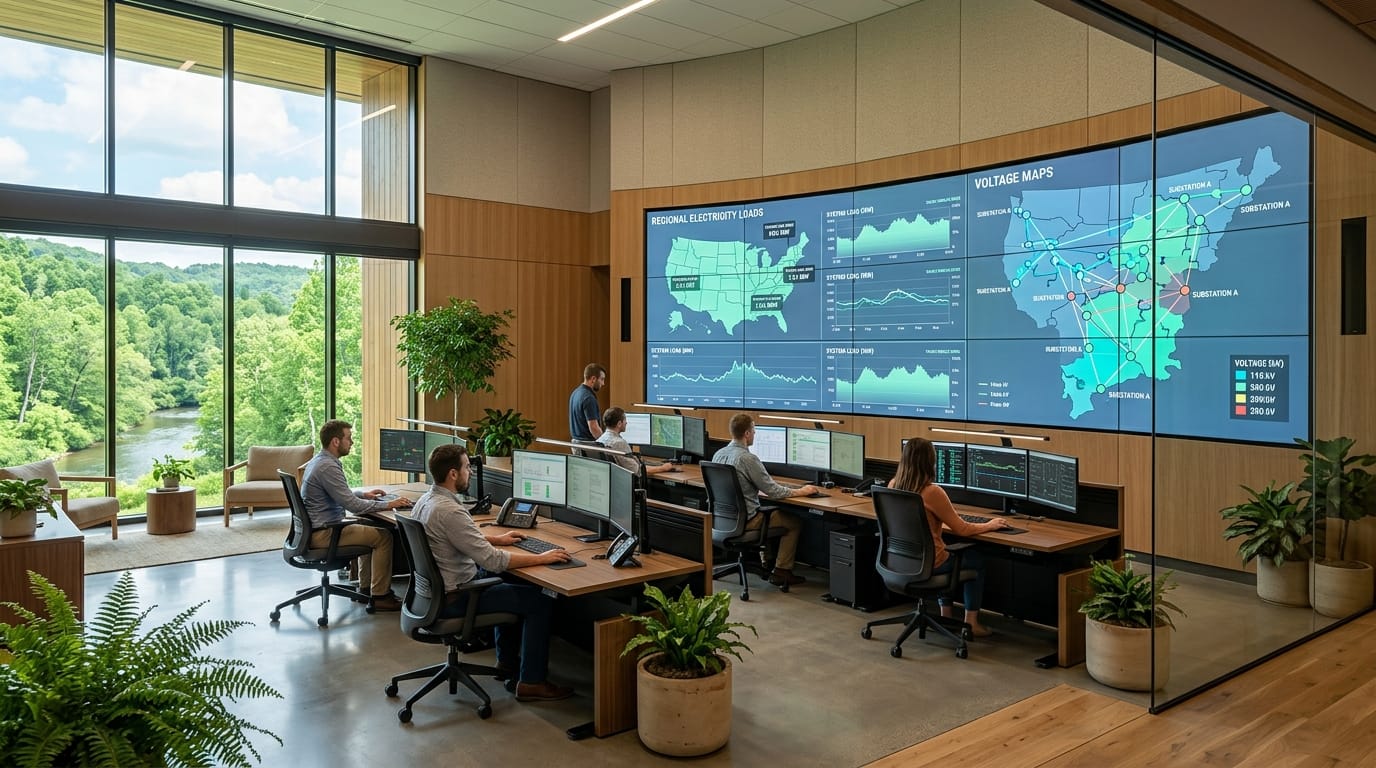

Public talk about artificial intelligence focuses on software speed and algorithmic breakthroughs. Behind that narrative, the private operational reality looks far more like heavy manufacturing hitting a wall.
The Physical Limits of Digital Growth
Every conversation about artificial intelligence gravitates toward software - algorithms, model architecture, and the pace of coding improvements. That framing is accurate as far as it goes, but it leaves out the more consequential story. Behind every digital task sits a physical building drawing enormous amounts of power from an aging grid. Computing has reached a point where the primary constraint is no longer silicon design or software capability. It is raw electrical power. Data centers are expanding faster than utility networks can support, and that collision between fast-moving digital systems and slow-moving physical infrastructure is now reshaping how the technology industry plans, builds, and spends.
The Industrialization of Computing
Advanced computing requires a constant and substantial energy supply that regional utility networks were never designed to handle. Tech companies racing to scale understand platform economics - the dynamic where a connected system gains value as more participants join - which makes speed to market a primary competitive objective. That urgency produces sprawling facilities with power requirements far beyond anything older server infrastructure demanded.
When large operations connect to regional grids, they consume most of the available capacity, which drives wholesale electricity prices upward across the network. Those higher costs do not stay contained within the tech sector. They flow through shared utility infrastructure to reach homeowners, factories, and local businesses that see no direct benefit from the technology driving the demand. The physical grid operates as a commons. A sudden surge in consumption from one industry reshapes the cost environment for all other participants on the same lines.
Margin Compression in Commercial Real Estate
The pressure lands with particular force on commercial real estate owners and the businesses that occupy their buildings. These groups have historically treated utility expenses as a predictable, background cost - a line item that moves gradually and rarely demands strategic attention. Heavy data center growth in major regions has changed that assumption, turning electricity into a volatile and significant cost driver with direct consequences for unit economics, meaning whether the revenue from a single building actually covers what it costs to operate.
Property owners now find their margins exposed to infrastructure decisions made elsewhere. A data center opening in an adjacent substation zone can trigger rate increases across the local grid before a landlord has had any opportunity to adjust leases or contracts. The response has moved well beyond basic energy conservation. Advanced metering, smart building management systems, on-site solar generation, and battery storage are becoming operational necessities rather than sustainability gestures. Older buildings that generate acceptable returns under current utility rates can turn unprofitable quickly when local power costs shift - and that shift is no longer a remote risk in markets with active data center development.
The Friction Between Digital Timelines and Physical Reality
The structural tension at the center of this story is a mismatch in timelines. Technology firms want new computing sites operational within months to capture demand that moves quickly. Grid operators and utility regulators measure infrastructure upgrades in years, sometimes decades. The delivery channels through which electricity actually reaches end users - transmission lines, substations, transformer equipment - operate under procurement and permitting constraints that have no analog in software development.
Supply chain delays for large-format transformers, state-level regulatory processes, and labor shortages in electrical construction have combined to make rapid grid expansion genuinely difficult. The demand profile of modern computing sites further compounds the problem. Unlike industrial facilities that draw consistent loads, data centers swing dramatically in power consumption based on processing and cooling requirements. Utilities must now maintain substantial reserve capacity just to manage those fluctuations without destabilizing local networks - an expensive operational commitment that further strains the economics of grid investment.
Restructuring the Infrastructure Engine
The industry is beginning to internalize what the public narrative has been slow to acknowledge. Digital expansion is a capital-intensive, infrastructure-dependent enterprise with the same physical constraints that govern any heavy industrial build-out. State utility boards are exploring cost-sharing frameworks that would require large computing operators to contribute directly to grid upgrades rather than pass those costs on to existing ratepayers. Long-term power contracts, co-investment in generation capacity, and site selection driven primarily by grid access have become standard considerations in data center development.
The deeper shift is conceptual. The technology sector built its identity around weightlessness - the idea that computation exists at a remove from physical constraints, scaling freely through software alone. That framing no longer holds. The honest analytical picture is one where software ambitions are governed by the slow, expensive, and highly regulated work of generating and moving electricity at scale. Companies acquiring land near power-rich sites are not making a temporary tactical adjustment. They are acknowledging that grid access has replaced processing speed as the binding constraint on growth.